Project Based Learning (My Dream Project)
In line with Ministry of Human Resources Development’s (India) mandate to minimise ‘curriculum load’ on students and focus more on the overall development of students, including developing their life skills, UNESCO MGIEP, in partnership with Samsung, India, has initiated the MyDream project, an action research study to minimise load and stress in middle classes. A project-based learning model will be integrated with a social and emotional learning approach using technology, and implemented in over 60 Jawahar Navodaya schools from 8 regions within India. The thematic focus of the study will be tackling global issues to build more peaceful and sustainable societies.
An Introduction
Read this section to explore more on the case for project based and social and emotional learning as well as to learn more about the MyDream Project.
The case for Project Based and Social and Emotional Learning
In 2018, the Minister of Human Resource Development (India) recognised that the coursework for school students was more than that of university students in certain cases (i.e. citing examples of Bachelor of Commerce and Arts courses). The burden of coursework leaves teachers with little time to impart life skills and conduct activities to promote creativity among students. Furthermore, the traditional education system of passively learning facts and reciting them is no longer sufficient to prepare students to survive in today’s world. To be prepared for the modern world, students must possess fundamental skills, knowledge and 21st century skills (problem solving, research, time management and information synthesizing). This is where project-based learning proves to be effective in encouraging ‘learning by doing’, helping tackle real world-problems and encouraging ownership of learning. Additionally, for all round development of students, a more holistic approach to learning can be adopted with focus both on intellectual development and social and emotional learning, a process through which students can learn to effectively manage emotions, feel and show empathy for others, establish and maintain positive relationships and make responsible decisions.

MyDream Project
In line with Ministry of Human Resources Development’s (India) mandate to minimise the ‘curriculum load’ on students and focus more on their overall development, including building 21st century skills, UNESCO MGIEP has collaborated with Samsung, India for an action research study, using technology, to minimise load and stress in middle classes, therefore making them happier and more innovative. The objective of the research study is to drive learning outcomes for Maths and Science, based on the school assessments developed by the Jawahar Navodaya Vidyalaya (JNV).
Research Design
A project-based model coupled with a social and emotional learning approach will be implemented in over 60 schools in 8 regions across Jawahar Navodaya Vidyalaya schools in India. Read this section for more information.

Control Group
The first group of the research study will be the control group, which will include select 32 schools from Jawahar Navodaya Vidyalaya (JNV) that will receive no intervention. The group will continue the coursework as per existing curricula.

Experiment Group 1
The first experiment group will include 16 select schools from JNV. These schools will receive intervention in project-based learning for grade 7 students to introduce them to ‘difficult’ topics of grade 8 in fun, engaging and immersive ways using technology.

Experiment group 2
Experiment group 2 (students of 16 select schools from JNV) will receive thematic project-based learning interventions, coupled with social and emotional learning interventions.
Phases of Implementation
The implementation of the research study is divided across three phases – including Phase 1: Expert group formation and need assessments; Phase 2: Project and Assessment Design and Phase 3: Training and Implementation. Explore below for details.
Phase 1 – Expert Group Formation and Need Assessments
To guide this study, a team of educational psychologists, instructional designers, neuroscientists and digital pedagogy experts will be appointed. Regular consultation meetings, focused group discussions, online and face-to-face chats will be conducted with students, teachers and expert educators’ groups. These meetings will focus on identifying complex concepts from grade 8 and 9 Maths and Science curricula.
Phase 2 – Project and Assessment Design
Based on the need assessment study conducted by teachers, in phase 2 of implementation, projects will be designed around real-world issues, with focus on complex concepts identified for curricula of grades 8 and 9 in Math and Science. Phase 2 will also include designing qualitative assessments to measure student participation, motivation and engagement from experimental groups.
Phase 3 – Training and Implementation
The group of teachers selected for implementation of the project-based interventions in their grade 7 classrooms will be assisted with resources and guidance workshops. The project will be implemented for students of grade 7, during the course of one academic year. The control and experimental groups will be assessed over a two-year period.
Expected Outcomes
The data collected from the assessments conducted during the research study will inform the future implementation strategy of the project.

Effectiveness of project-based and social and emotional learning
Generate evidence that the integrated project-based and social and emotional learning integrated approach, using the digital medium, leads to enhanced learning outcomes in Maths and Science.

Report and White Paper
A comprehensive report and white paper will be prepared to detail the results of the study across over 60 JNV schools in 8 regions in India. The strategy to scale the study nationally and internationally will be developed basis the results.
What’s the latest!
Read this section for the latest insights into activities related to the project.
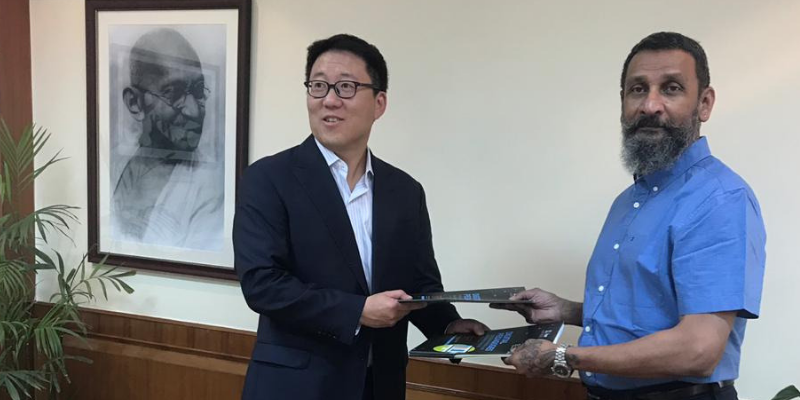
The research study was conceptualized as a response to the Ministry of Human Resource Development, Government of India’s request to reduce curriculum stress in school children. As the research, knowledge and implementation partner, UNESCO MGIEP will conduct a two-year research study at 64 JNV schools in 8 regions across India.
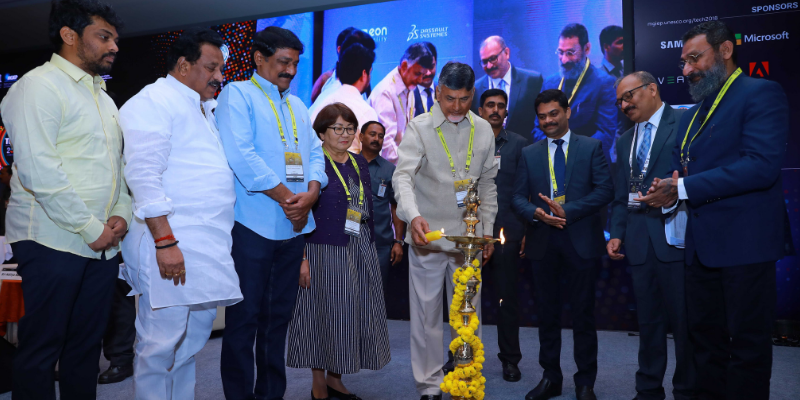
TECH 2018, held over three days, showcased the role of games and digital learning in enabling a shift from “transmissive pedagogies” to “transformative pedagogies” to create peaceful and sustainable societies. The conference saw participation by over 1,000 registered delegates from over 50 countries on a daily basis and witnessed highly engaging deliberations by experts in various domains related to education and technology such as games for learning, artificial intelligence for education, social and emotional learning and data privacy & ethics.
Our Partners

Interested in the Project?
If you’re a teacher/ educator, policymaker or student who would like to learn more about this initiative, write to Aditi Pathak (a.pathak@unesco.org) or Robin Sharma (r.sharma@unesco.org) for information / details.


